
Gaming, Gambling & Online Risk Education for Schools
Age-appropriate sessions helping young people understand how gaming, gambling, money and influence shape their choices online.
Supporting online safety, statutory RSHE and KCSIE
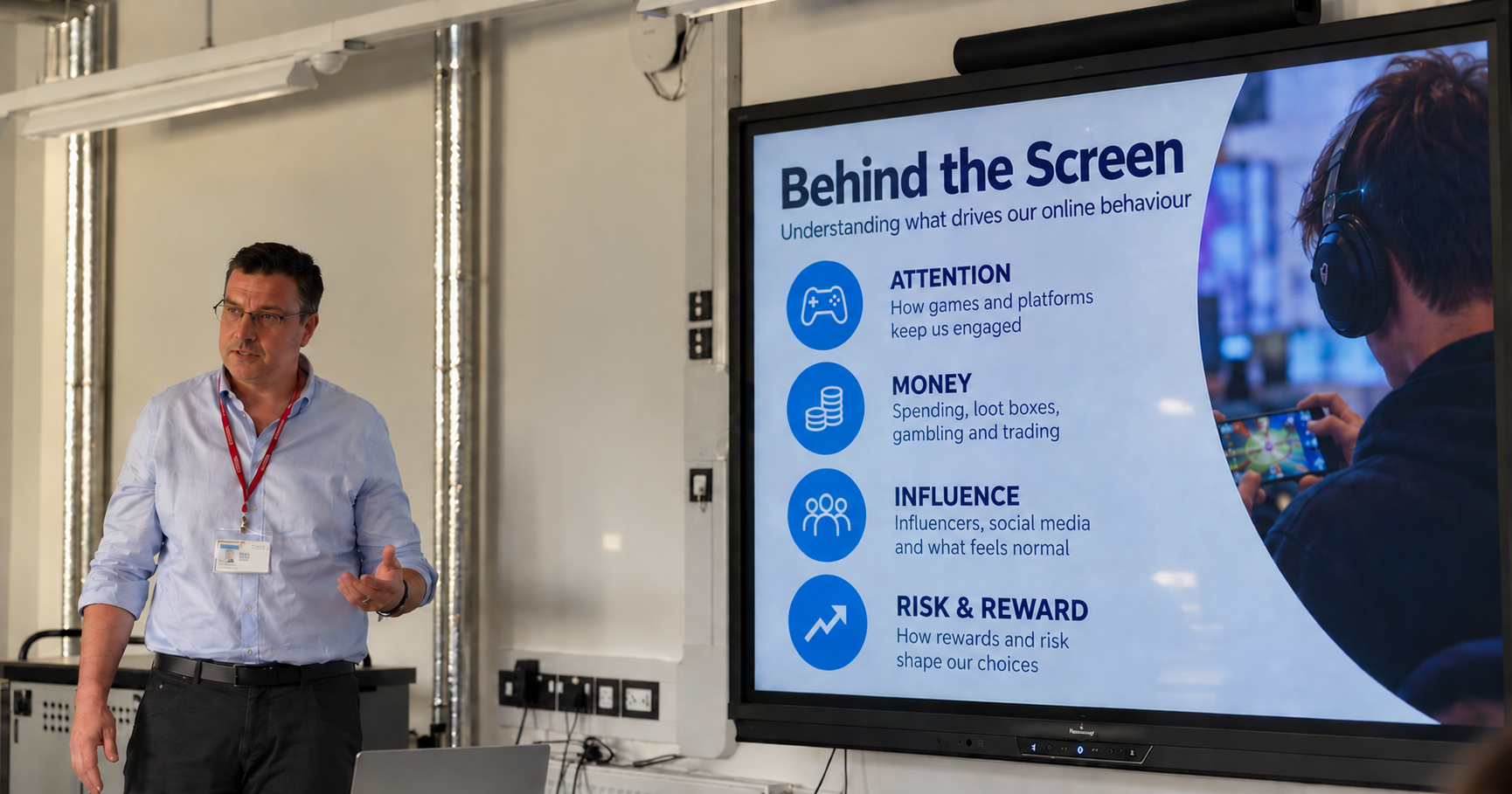
Young people are growing up in an online world designed to capture their attention, influence their choices and, increasingly encourage them to spend money. Project Wellbeing helps students see how that works — and gives them practical ways to recognise risk and make safer choices.
“Chris delivered an engaging and thought-provoking session that helped our students think differently about gaming, gambling, money, influence and online risk.”
— Ian Mills, Assistant Headteacher, Carlton School
Aligned with current DfE guidance
Our schools programme has been developed with current Department for Education guidance on online safety, statutory RSHE requirements and Keeping Children Safe in Education (KCSIE) in mind.
The statutory RSHE guidance includes education around:
- Online gaming and video-game monetisation
- Age restrictions around computer games, online gaming and gambling sites
- Scams, fraud and other financial harms
- The potential for gaming to become addictive
- Excessive time online and its impact on wellbeing
- Where and how to report concerns and seek support
Keeping Children Safe in Education (KCSIE) also places online harms within schools’ wider safeguarding responsibilities. Our sessions help schools bring these issues to life in an engaging, age-appropriate way.
Four themes run through every session
Gambling is an important part of the programme, but not the whole story. Each session looks at how the online world uses attention, money, influence and reward — and how young people can make better-informed choices within it.
Attention
Persuasive design, notifications and features built to keep people playing, scrolling and coming back.
Money
In-game spending, loot boxes and virtual currencies, scams, trading and crypto.
Influence
Advertising, influencers, FOMO and “easy money” messages that shape attitudes and choices.
Risk & reward
Chance-based rewards, gambling mechanics, chasing losses and knowing when to step away.
Two awareness programmes
Different ages, different risks
Gaming, Loot Boxes & Online Risk
An introduction to the online world young people meet through gaming. Students explore how games and platforms are designed to encourage continued play and spending, how loot boxes and chance-based rewards work, and how advertising, influence and gambling-like mechanics can affect the choices they make.
Topics include: gaming and in-game purchases, persuasive design, loot boxes and chance-based rewards, gambling-like mechanics, online advertising and influence, scams and “too good to be true” offers, taking breaks and healthy gaming habits, recognising warning signs and where to seek support.
Gaming, Gambling & Online Financial Risk
As young people gain greater financial independence, online risks can change too. This session explores gaming and loot boxes alongside online gambling, trading and crypto, looking at how social media, influencers, persuasive design and “easy money” messages can shape attitudes to money and risk.
Students explore the psychology of risk and reward, chasing losses, scams and financial harm — and how to recognise when seemingly normal behaviour is becoming difficult to control.
Topics include: online gambling and sports betting, gaming and loot boxes, social media and influencer content, “easy money” messages and financial scams, trading and crypto, risk and reward, chasing losses, recognising harmful patterns and where to seek support.
Choose how you bring it into your school
Everything is provided, so teachers can pick up the lesson and deliver it without having to develop additional resources themselves.
Selected activities also help students practise discussion, persuasive and transactional writing skills for GCSE English.
In-person 45–60 minute sessions or assemblies • Suitable for year groups or smaller class groups • Available to schools across the UK
Safeguarding Chris is Enhanced DBS checked, and every session includes signposting to support services for anyone affected.
How it works
What schools say
“Chris delivered an engaging and thought-provoking session that really connected with our students. He helped them think differently about gaming, gambling, money, influence and online risk, using his own lived experience to bring the issues to life. The session opened up important conversations around risk, reward and the choices young people make online, and gave students a much better understanding of how these behaviours can develop.”
Ian Miles Assistant Headteacher, Carrington School
“Thanks for coming to speak to our young people Chris, giving them some much needed steer on the harms of gambling. Such an easy but devastating trap to fall into… Your ability to engage young people in an open, honest, and relatable way… encouraged important conversations. The session was highly valuable, and I would strongly recommend Chris to any school or educational setting looking to equip young people with the knowledge and awareness needed to make informed choices.”
Stuart Woods Chief Executive Officer, Coram’s Fields
About Chris

Chris Gawor is an experienced speaker and educator who combines lived experience with more than 20 years working in senior commercial and leadership roles.
For 12 years, Chris lived with a hidden addiction to stock trading — an experience that gives him a very personal understanding of how risk, reward and seemingly normal behaviours can become increasingly difficult to control. He has since spoken openly about it, including in an interview with Business Insider.
Today, through Project Wellbeing, Chris works with schools and organisations to help people understand online risk and recognise earlier when behaviour around money, gaming or gambling starts to cause harm. He is also an ICF-accredited executive and leadership coach, which shapes how he works in schools: creating space for honest conversation, asking good questions and helping young people think for themselves rather than simply being told what not to do.
✓ Enhanced DBS checkedSupporting parents and carers
The conversation doesn’t have to stop when students leave the classroom.
Schools can also receive a practical digital resource to share with parents and carers, helping them understand how gaming, in-game spending, online influence and gambling-like features can affect young people’s choices — from loot boxes to betting, trading and crypto.
The guide includes what to look out for, how to start a conversation and where to find further support.
Interested in a session for your school?
Enquire about a school session